Stand out in outbound by doing what shared tools and playbooks cannot. Combine several signals to understand the situation an account is in, send ten or twenty well-researched messages instead of hundreds of generic ones, and give prospects something useful, such as an insight, a recommendation or a sample of the work, before asking for a meeting.
Key takeaways
- The obvious signals are crowded. Funding rounds, job changes and new hires are what every LLM recommends, so the fifth email about the same event can do more harm than good.
- Combine signals to read the situation. The problems in a job posting, website changes, new ads and press say why an account might need help now, which matters more than a contact’s name or title.
- Give value before asking for time. An insight about their business, a specific recommendation or a small sample of the work does more than a request for a meeting.
- Ten or twenty good messages beat a hundred generic ones. When everyone can send at scale, volume stops being an advantage.
- Start with the AI plan you already have. Unused Claude or OpenAI capacity can build a first prospect list before you pay for Apollo or Clay.
I sat down with Jeremy Wilson, founder of SaucePad, for our latest Deep Dive on what AI is changing in demand generation and outbound. Everyone now has the same AI tools, the same buying signals and, increasingly, the same playbooks. In Jeremy’s words, “the same tools that you’re using, someone else is using. LLMs are recommending the same playbooks or the same signals.”
Give people something useful upfront
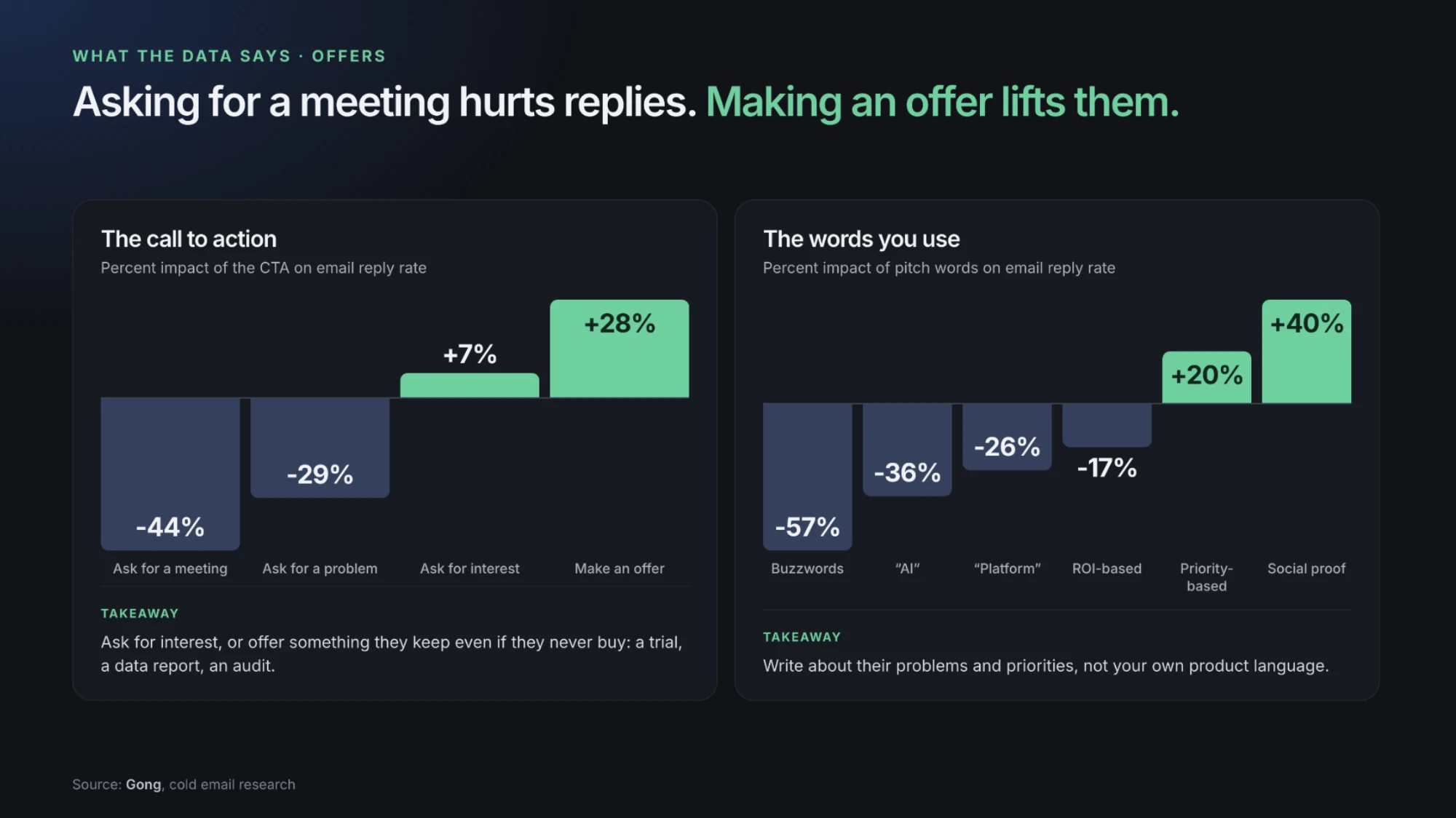
B2B marketing has long relied on gated content and outreach designed to book a meeting. Jeremy’s view is that the value has to arrive much earlier: an insight about the prospect’s business, a specific recommendation or a small sample of the work you do. That can be a couple of data points, a short analysis or a small assessment tool built with AI. Social proof belongs early too, such as recent results for a client like them. Gong’s cold email research points the same way: asking for a meeting cut reply rates by 44%, and making an offer lifted them by 28%.
Look beyond the obvious buying signals
Ask an LLM how to set up signal-based outbound and it will point you to the same signals as everyone else: funding rounds, job changes and new hires. If you are the fifth person emailing a prospect about their new role, the email can do more harm than good.
The opportunity is in combining signals to understand what is happening inside an account and why someone might need help now. A job posting tells you more when you read the problems it describes. A prospect’s new website pages, changed offers, new ads and recent press fill in the rest. As Jeremy put it, “it’s less about the person and more about the situation and what they’re going through.” That context makes outreach relevant, where inserting a name or company into an AI-generated email does not.
When the common data runs out, build your own. One client of ours sold to a niche ICP that standard prospecting tools did not cover, so we pulled accounts from niche data sources and grew their target list from about 750 accounts to nearly 10,000.
Start with the AI you already pay for
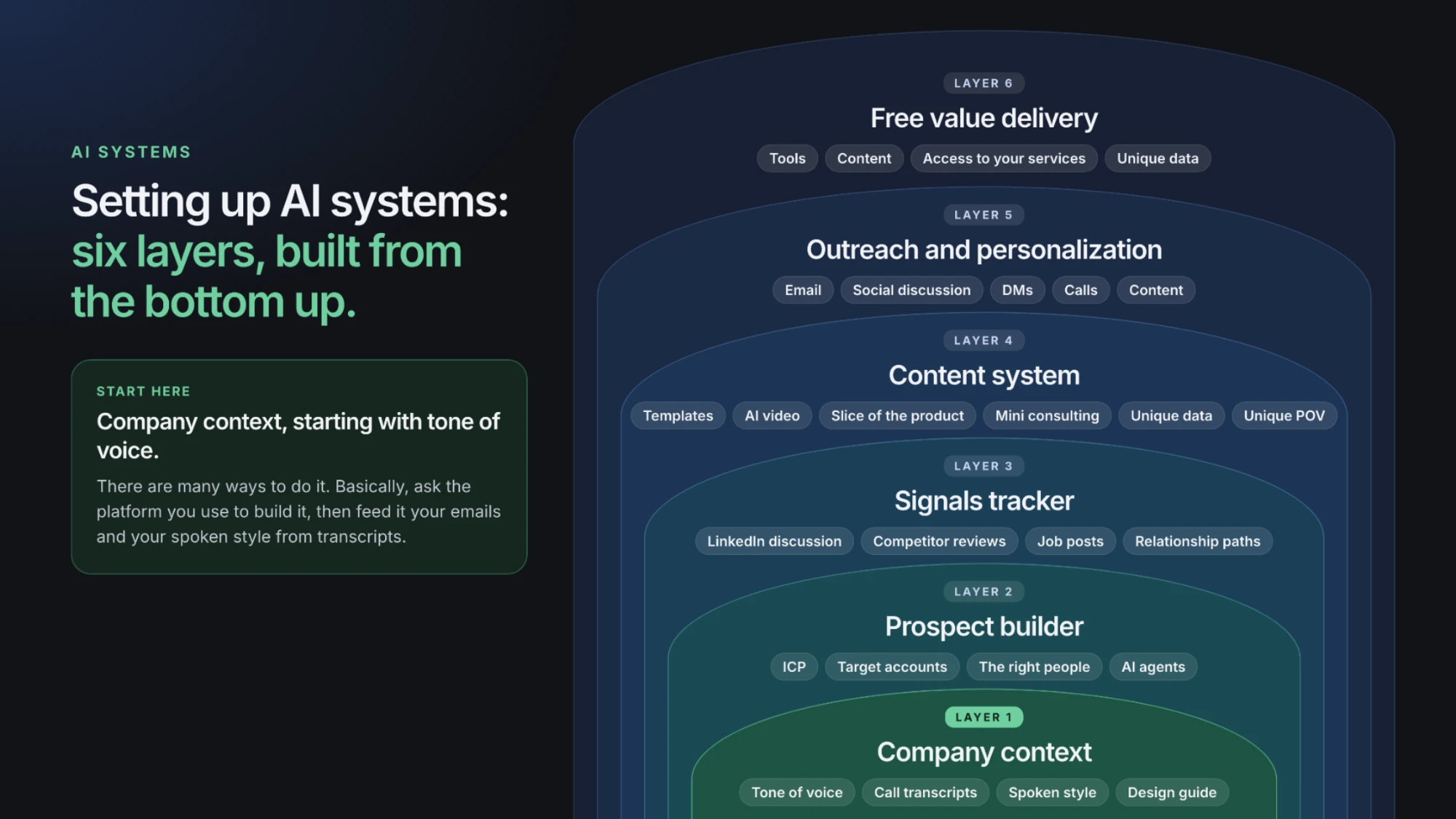
Jeremy builds these systems in six layers, from the bottom up. The first is company context: your tone of voice, spoken style and design guide. Ask the AI platform you use to build it, then feed it your emails and call transcripts.
Expensive tools are not the first step. Jeremy suggests using the spare capacity in an existing Claude or OpenAI plan to build a prospect list from your ICP and watch for signals. It might find an email for 10% or 20% of the contacts, but it costs nothing extra. Add Apollo for enrichment or Clay for signal tracking when you outgrow it.
Less outreach, better outreach
AI makes it easy to send hundreds of emails, so volume is no longer much of an advantage. Jeremy made the case for ten or twenty thoughtful, targeted messages a day instead of a hundred generic ones. He also recommends finding relevant LinkedIn conversations and adding something useful to them, since reach on your own posts is hard to get, rather than relying entirely on cold email.
AI makes it easier for everyone to do more of the same. The advantage comes from understanding your prospects better and giving them a reason to engage.
Watch the full Deep Dive with Jeremy Wilson.
Frequently asked questions
Which buying signals should you use for outbound?
Use the common signals, such as funding rounds, job changes and new hires, with care, because every LLM recommends them and a prospect may already have several emails about the same event. Combine them with signals specific to your ICP: the problems described in a job posting, new website pages, changed offers, new ads, recent press and the LinkedIn discussions prospects take part in. Together they explain why an account might need help now.
How many cold emails should a rep send a day?
Fewer than AI makes possible. Ten or twenty thoughtful, researched messages a day usually do more than a hundred generic ones, because volume is no longer an advantage when every competitor can send at scale. Cold email still works, but irrelevant cold email performs worse than ever.
What should a first outreach email offer?
Something useful before any request for time: an insight about the prospect’s business, a specific recommendation, a few relevant data points or a small sample of the work, such as a short analysis or an assessment tool. Early social proof, such as recent results for a similar client, also helps a new vendor stand out.
Do you need Clay or Apollo to build a prospect list?
Not to start. An existing Claude or OpenAI subscription can search for prospects that match your ICP, attempt enrichment and watch for signals, using capacity you already pay for. It will find emails for only part of the list, so tools like Apollo for enrichment or Clay for signal tracking are the next step once that limit is reached.